At the turn of the new millennium, Sega made a game called Cosmic Smash. It came to select arcades in Japan and Europe before a Japan-only release on console.
Set in refreshingly minimalist spaces brought to life by music and graphic design, the game was a unique blend of sports and puzzle action. Think low-gravity squash meets block breaker. A real trip to the edge of space and time.
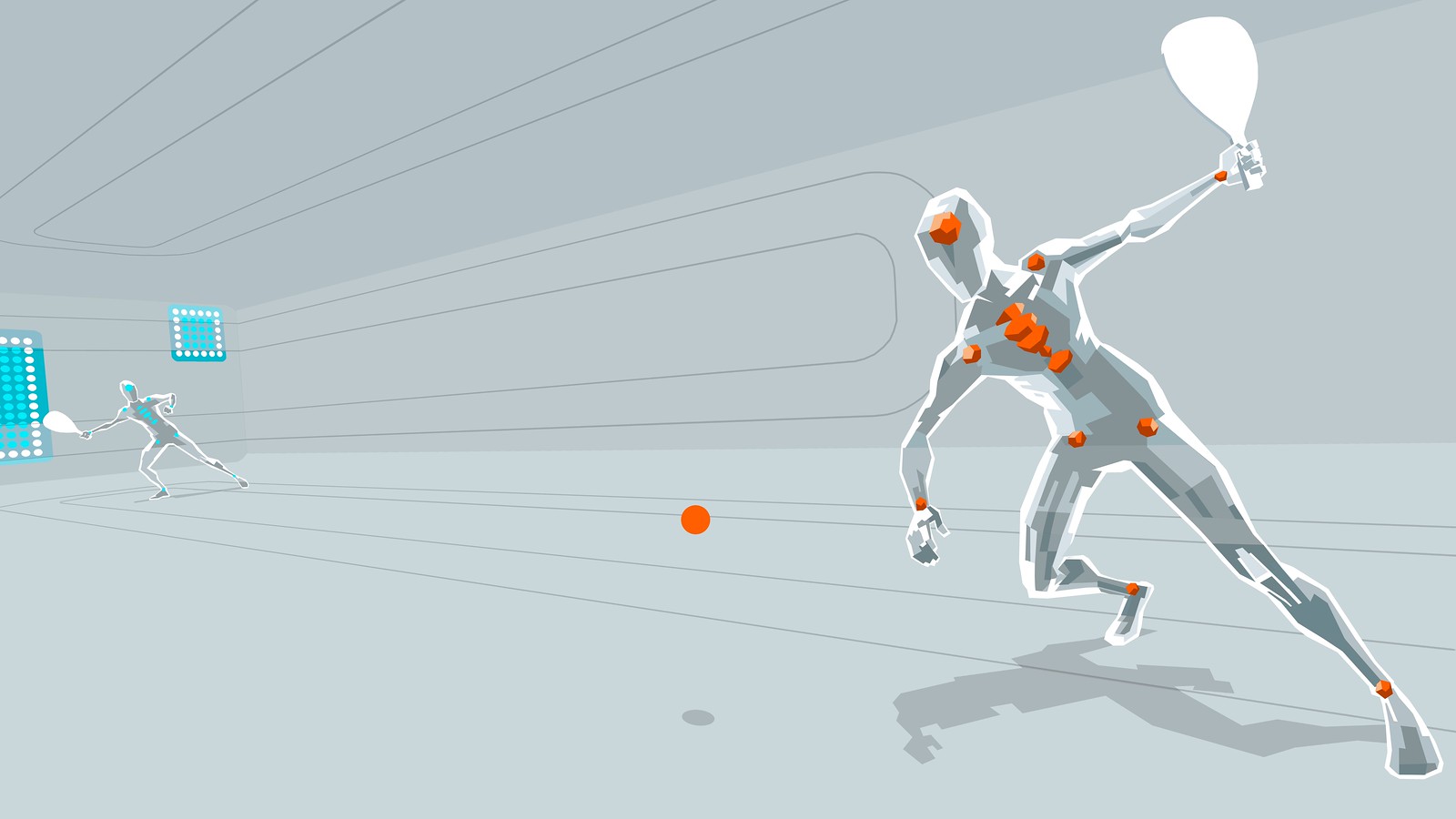
Versus. Concept by art director Rob Davis. (Copyright, RapidEyeMovers 2023)
The game seemingly came out of nowhere but quickly distinguished itself as a design and style icon for the ages, one of those rare games that look, sound and feel unlike anything you’ve ever played before.
While the game felt like it came from an alternate universe, it wholly embraced the most fundamental part of what makes games great: it was a blast. If ever I wanted to travel to a virtual world, it would be this one: a place where I can relax while moving, in inviting spaces that are uncluttered and effortlessly stylish, devoid of the stresses, the noises and the garishness of our daily grind.

Cosmonauts. Concept by art director Rob Davis. (Copyright, RapidEyeMovers 2023)
This world just had to come to VR, but building beautiful worlds takes great people.
While our planet was locking down, I teamed up with a dream team of people whose work I admire. From VR pioneers Wolf & Wood, who I’ve been building the PS5 and PSVR2 game The Last Worker with, top designers Cory Schmitz (Rez Infinite, Sound Shapes) and Arkotype (Polytron), musicians Ken Ishii (Rez Infinite) and Danalogue (The Comet is Coming, Soccer 96), art director Rob Davis (The Motherless Oven) and sound designer Dan Pugsley (Alba: A Wildlife Adventure).
Together, we set out to reimagine the beloved classic for VR and online gameplay. Amazingly, Sega trusted us.
Here is the first look at our game, C-Smash VRS.

VRS stands for VR and Versus. On March 23, you can sample both when we release a C-Smash VRS demo for PS VR2 on PlayStation Store, which you can enjoy with another player online or in a solo traini